Colin Copeland
Colin co-founded Caktus in 2007. As Chief Technical Officer, he helps ensure that Caktus remains at the forefront of the open source community. He regularly implements services and products to better serve clients. He loves coding and still actively works on client projects, often as lead developer.
A proponent of automated testing and continuous integration, Colin is always researching best practices and creating efficiencies to improve deployment processes and provide outstanding support for Caktus clients. He particularly enjoys working on social innovation projects, some of which he’s become involved with through Code For Durham, a civic hacking brigade, which he helped to found around 2013.
One of Colin’s favorite, long-term projects was building the Open Data Policing NC website for the Southern Coalition for Social Justice, which displayed North Carolina police stop data. As a result of the project, Colin was invited to the White House Police Data Initiative in 2016 to share his ideas on how to ensure law enforcement transparency and accountability. In 2020-2021, Colin worked to relaunch the Open Data Policing NC website as NC Cop Watch. It draws on public records to publish up-to-date stop, search, and use-of-force data — broken down by race and ethnicity.
When Colin isn’t working on client projects, he continues to be motivated by volunteering through Code for Durham. He also enjoys baking, playing piano, and spending time with his family.
Hear more about Colin, his background, and his interests in this Modern CTO podcast and the DjangoChat podcast. You can also connect with him on GitHub, LinkedIn, and Twitter.

2014

Caktus Just Bought a Building in Downtown Durham!
After sustained growth that has us packed in six suites, we have spent the past year and a half seeking new space. We’ve found it! I’m pleased to announce that Caktus has bought a historic 1910 building with nearly 11,000 square feet of space in Downtown Durham. We’ll be right near five points at 108 Morris St. The new building will be completely renovated from top to bottom to create an open workspace that’ll make it even easier for us to collaborate and share ideas.
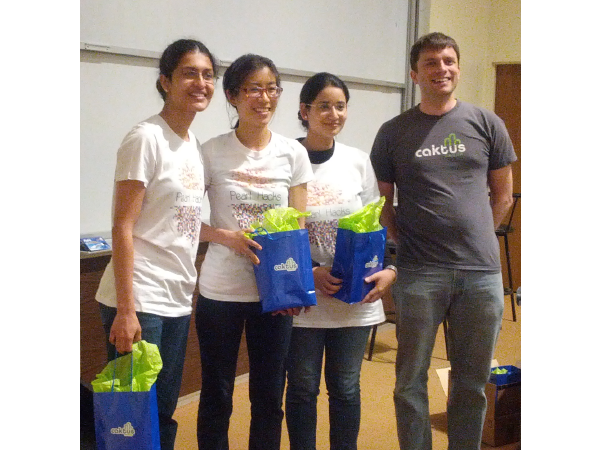
Congrats to PearlHacks Winners (Including Our Intern, Annie)!
Caleb Smith, Caktus developer, awarding the third place prize to TheRightFit creators Bipasa Chattopadhyay, Ping Fu, and Sarah Andrabi.
Many congratulations to the PearlHacks third place winners who won Sphero Balls! The team from UNC’s Computer Science department created TheRightFit, an Android app that helps shoppers know what sizes will fit them and their families among various brands. Their prize of Sphero Balls, programmable balls that can interact and play games via smart phones, was presented by Caktus developer and Pearl Hacks mentor Caleb Smith as part of our sponsorship. PearlHacks, held at UNC-Chapel Hill, is a conference designed to encourage female high school and college programmers from the NC and VA area.
2013
Caktus is hiring a Design Visionary and User Experience Virtuoso with a Knack for Coding
Do your mornings usually consist of reading design blogs and drinking coffee? Are you obsessive about fonts? Are you constantly seeking out new inspiration to make your designs better? As a Front-End Developer + Designer at Caktus, you’ll be able to put your passion for design and development to work by creating beautiful designs for complex websites. You will work closely with clients to bring their visions to life and help lead the branding and design process. Our designers take ownership of the user experience and design process from the beginning and collaborate with our development team to implement the vision. You should be passionate about the open source community and the philosophy behind it. If you’re interested in becoming part of and contributing to a creative, dynamic team, here’s an idea of what you’ll do:
AngularJS to PyGame: Caktus’ 2nd ShipIt Day
We had our 2nd ShipIt Day at Caktus last week. ShipIt (coined by Atlassian), in case you don’t know, is an exercise that allows your team to work on alternative projects in a 24-hour hackathon. We brainstorm ideas related to Caktus, break into small groups and try to build a project by the end of the day on Friday. It’s a lot of fun and provides an opportunity to work on internal tools, try something new and collaborate together. \
Caktus sponsoring and speaking on mobile health at SwitchPoint 2013
SwitchPoint is a one-of-a-kind conference and a unique opportunity to learn, share ideas, and hear about global and mobile health efforts around the world. We had a great time at SwitchPoint last year. I’m excited to announce that Caktus, for the second year in a row, is sponsoring [SwitchPoint 2013]{style=“color: rgb(17, 85, 204);”}.
Raspberry IO announced at PyCon
PyCon is one of our favorite conferences here at Caktus. We’ve been attending for the past 4 years now and it is amazing to see how much the community has grown. This year is especially special because Jesse Noller and the Python Software Foundation (PSF) came to us to help them build Raspberry IO. The site features work from the Python community and their adventures in using Raspberry Pi with Python.
2012

Project Mwana featured in the BBC
Caktus has had the opportunity to work on the infrastructure of RapidSMS, an application framework that allows data collection and logistics coordination using mobile phone text messages for communication. The BBC World News recently posted an article, "RapidSMS: Saving a life in 160 characters" detailing the effects of RapidSMS technology is having on HIV/AIDS treatment in the developing world. The article focuses on work being done to combat the HIV/AIDS epidemic in Malawi where there is one of the highest rates of infection in the world.

Caktus Team Members Presenting at DjangoCon 2012
Caktus is proud to announce that four of our developers will be presenting at this year’s DjangoCon. We are also happy to announce that we will be sponsors of DjangoCon, taking place in Washington D.C. on September 4th through the 7th. In addition to the four Caktus team members who will be presenting this year, our entire development staff will be in attendance enjoying the conference and city.
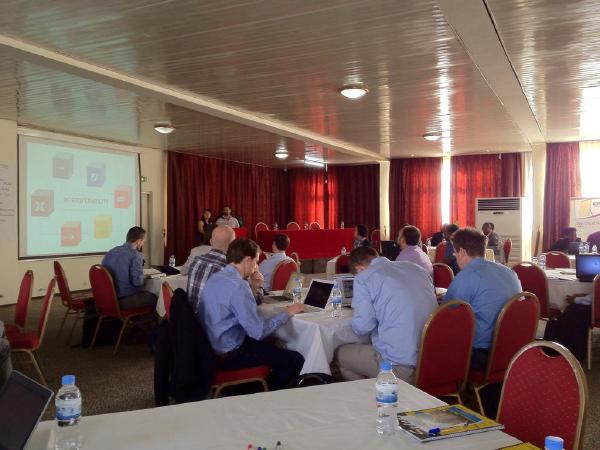
Thoughts after attending the UNICEF Rwanda mHealth Conference
This past July, I had the pleasure of attending the UNICEF Rwanda Conference in Kigali, Rwanda. The conferences focus was on developing a comprehensive eHealth suite for numerous nations to implement.
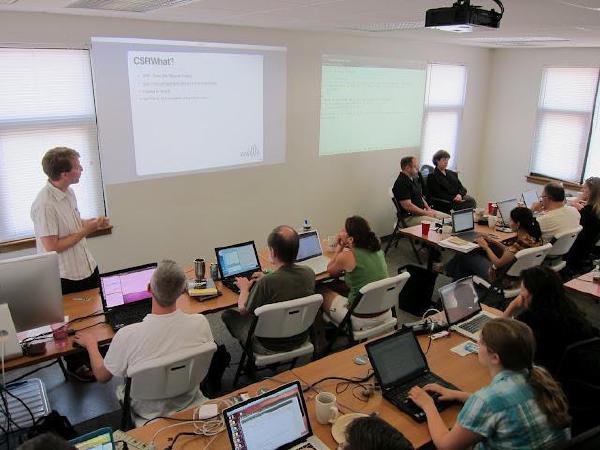
Django Training
Caktus is proud to announce that we are now offering Django training services. This new service includes both off and on-site training for you and your team to become a Djangonaut.