Caktus Blog
2017
Python Tool Review: Using PyCharm for Python Development - and More
Back in 2011, I wrote a blog post on using Eclipse for Python Development.
I've never updated that post, and it's probably terribly outdated by now. But there's a good reason for that - I haven't used Eclipse in years. Not long after that post, I came across PyCharm, and I haven't really looked back.
Requests, Under the Hood (PyCon 2017 Must-See Talk 5/6)
Part five of six in the 2017 edition of our annual PyCon Must-See Series, highlighting the talks our staff especially loved at PyCon. While there were many great talks, this is our team’s shortlist.
Managing your AWS Container Infrastructure with Python
We deploy Python/Django apps to a wide variety of hosting providers at Caktus. Our django-project-template includes a Salt configuration to set up an Ubuntu virtual machine on just about any hosting provider, from scratch. We've also modified this a number of times for local hosting requirements when our customer required the application we built to be hosted on hardware they control. In the past, we also built our own tool for creating and managing EC2 instances automatically via the Amazon Web Services (AWS) APIs. In March, my colleague Dan Poirier wrote an excellent post about deploying Django applications to Elastic Beanstalk demonstrating how we’ve used that service.
5 Ways to Deploy Your Python Web App in 2017 (PyCon 2017 Must-See Talk 4/6)
Part four of six in the 2017 edition of our annual PyCon Must-See Series, highlighting the talks our staff especially loved at PyCon. While there were many great talks, this is our team’s shortlist.

The Caktus Success Model
Here at Caktus, we’ve been fortunate to work on some incredible projects with our clients. For example, we built the world’s first SMS voter registration app for Libya, developed a digital archiving system for the world’s largest on-demand video provider, and created a survey tool with auto-scaling architecture to help the University of Chicago track school reform.
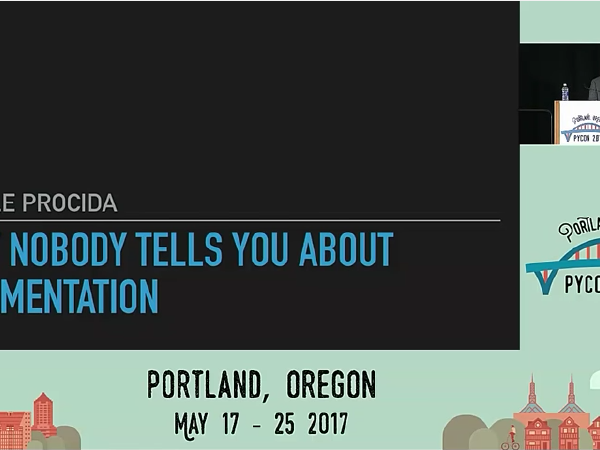
How Documentation Works, and How to Make It Work for Your Project (PyCon 2017 Must-See Talk 3/6)
Part three of six in the 2017 edition of our annual PyCon Must-See Series, highlighting the talks our staff especially loved at PyCon. While there were many great talks, this is our team’s shortlist.

TriAgile 2017 Recap
I attended the TriAgile conference in Raleigh, NC on March 30th, 2017 and wanted to share some takeaways from a couple of the talks I saw. Overall, the conference was a nice opportunity to network with some local Agilists and hear about their work and experiences. It was well organized, and I was pleasantly surprised by the size of the Agile community in the Triangle!

Python at Instagram (PyCon 2017 Must-See Talk 2/6)
Part two of six in the 2017 edition of our annual PyCon Must-See Series, highlighting the talks our staff especially loved at PyCon. While there were many great talks, this is our team’s shortlist.

Decorators, Unwrapped: How Do They Work? (PyCon 2017 Must-See Talk 1/6)
Part one of six in the 2017 edition of our annual PyCon Must-See Series, highlighting the talks our staff especially loved at PyCon. While there were many great talks, this is our team’s shortlist.
Subtests are the Best
Subtests are the best
Testing our code is important. Because developers write bugs, it’s valuable to catch and correct them before the code gets to production so our apps work as they should. Specifically, we want tests that are DRY (Don’t Repeat Yourself), thorough, and readable. Though there are many ways to try to accomplish these goals, subtests make each of them easier. If you’re not using subtests in your test classes, you probably should be.