Django
2019
How to Set Up a Centralized Log Server with rsyslog
For many years, we've been running an ELK (Elasticsearch, Logstash, Kibana) stack for centralized logging. We have a specific project that requires on-premise infrastructure, so sending logs off-site to a hosted solution was not an option. Over time, however, the maintenance requirements of this self-maintained ELK stack were staggering. Filebeat, for example, filled up all the disks on all the servers in a matter of hours, not once, but twice (and for different reasons) when it could not reach its Logstash/Elasticsearch endpoint. Metricbeat suffered from a similar issue: It used far too much disk space relative to the value provided in its Elasticsearch indices. And while provisioning a self-hosted ELK stack has gotten easier over the years, it's still a lengthy process, which requires extra care anytime an upgrade is needed. Are these problems solvable? Yes. But for our needs, a simpler solution was needed.
How to Switch to a Custom Django User Model Mid-Project
The Django documentation recommends always starting your project with a custom user model (even if it's identical to Django's to begin with), to make it easier to customize later if you need to. But what are you supposed to do if you didn't see this when starting a project, or if you inherited a project without a custom user model and you need to add one?

Coding for Time Zones & Daylight Saving Time — Oh, the Horror
In this post, I review some reasons why it's really difficult to program correctly when using times, dates, time zones, and daylight saving time, and then I'll give some advice for working with them in Python and Django. Also, I'll go over why I hate daylight saving time (DST).
Why We Love Wagtail (and You Will, Too)
New clients regularly ask us if we build WordPress sites. When we dig deeper, we generally learn that they’re looking for a user-friendly content management system (CMS) that will allow them to effortlessly publish and curate their site content. As we’ve written about previously, WordPress can be a good fit for simple sites. However, the majority of our clients need a more robust technical solution with customizable content management tools. For the Python-driven web applications that we develop, we love to work with Wagtail.

Django: Recommended Reading
Pictured: Our library of reference books at Caktus cover topics including Django and Python, as well as project management and Agile methodologies.
A Guide To Creating An API Endpoint With Django Rest Framework
As part of our work to make sharp web apps at Caktus, we frequently create API endpoints that allow other software to interact with a server. Oftentimes this means using a frontend app (React, Vue, or Angular), though it could also mean connecting some other piece of software to interact with a server. A lot of our API endpoints, across projects, end up functioning in similar ways, so we have become efficient at writing them, and this blog post gives an example of how to do so.

How to Use Django Bulk Inserts for Greater Efficiency
It's been awhile since we last discussed bulk inserts on the Caktus blog. The idea is simple: if you have an application that needs to insert a lot of data into a Django model — for example a background task that processes a CSV file (or some other text file) — it pays to "chunk" those updates to the database so that multiple records are created through a single database operation. This reduces the total number of round-trips to the database, something my colleague Dan Poirier discussed in more detail in the post linked above.

Caktus Blog: Top 18 Posts of 2018
In 2018, we published 44 posts on our blog, including technical how-to’s, a series on UX research methods, web development best practices, and tips for project management. Among all those posts, 18 rose to the top of the popularity list in 2018.
2018
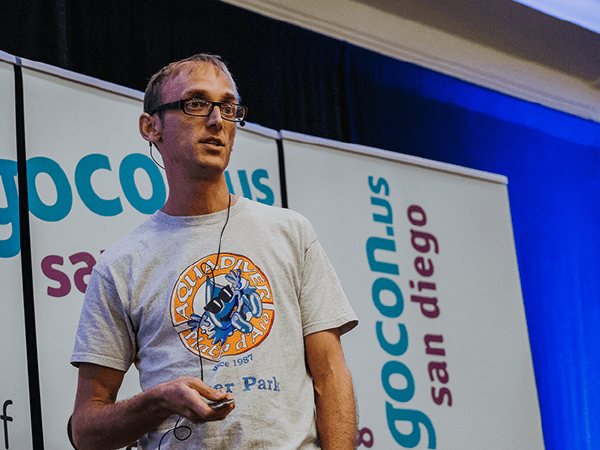
Django Depends on You: A Takeaway from DjangoCon
Photo by Bartek Pawlik.
DjangoCon 2018 attracted attendees from around the world, including myself and several other Cakti (check out our DjangoCon recap post). Having attended a number of DjangoCons in the past, I looked forward to reconnecting with old colleagues and friends within the community, learning new things about our favorite framework, and exploring San Diego.
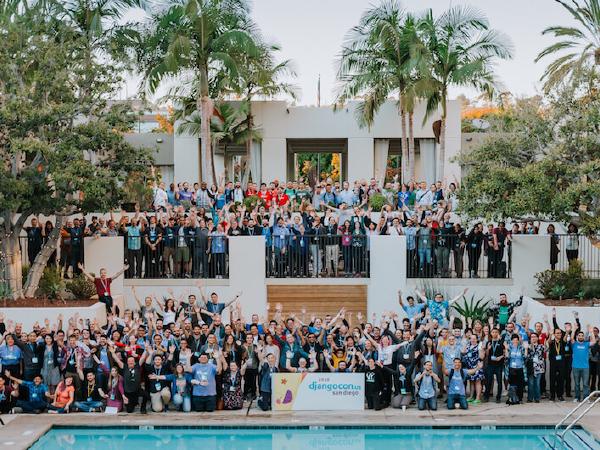
DjangoCon 2018 Recap
Above: Hundreds of happy Djangonauts at DjangoCon 2018. (Photo by Bartek Pawlik.)
That’s it, folks — another DjangoCon in the books! Caktus was thrilled to sponsor and attend this fantastic gathering of Djangonauts for the ninth year running. This year’s conference ran from October 14 - 19, in sunny San Diego. ☀️