Python
2025

PydanticAI Agents Intro
In previous posts, we explored function calling and how it enables models to interact with external tools. However, manually defining schemas and managing the request/response loop can get tedious as an application grows. Agent frameworks can help here.
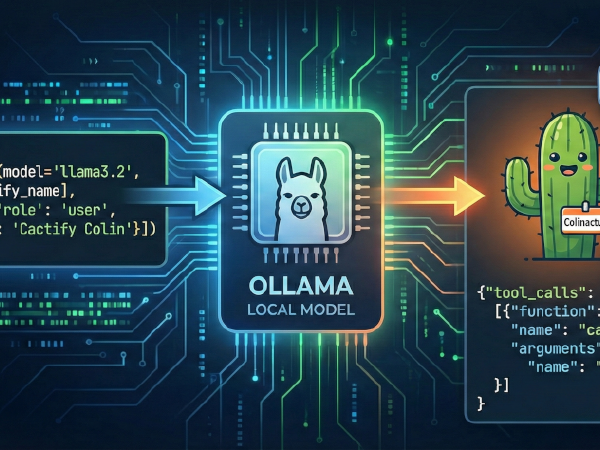
LLM Basics: Ollama Function Calling
In our previous post, we introduced function calling and learned how to do it with OpenAI’s LLMs.
In this post, we’ll call the same cactify_name function from that post using Meta’s
Llama 3.2 model, installed locally using Ollama. The techniques in this post should also work
with other Ollama models that support function-calling.
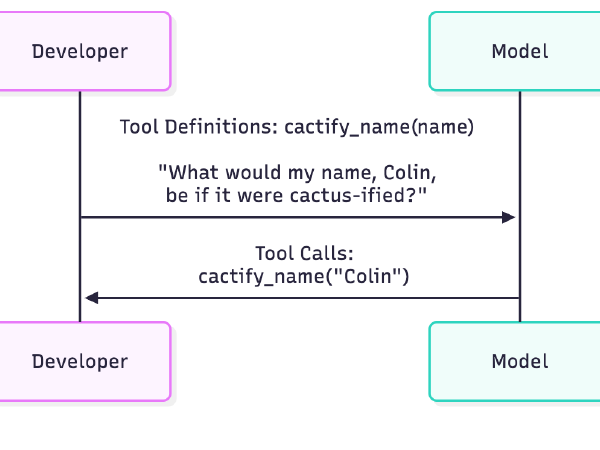
LLM Basics: OpenAI Function Calling
In our previous post, we explored how to send text to an LLM and receive a text response in return. That is useful for chatbots, but often we need to integrate LLMs with other systems. We may want the model to query a database, call an external API, or perform calculations.

Accessible Traffic Stop Data with NC CopWatch
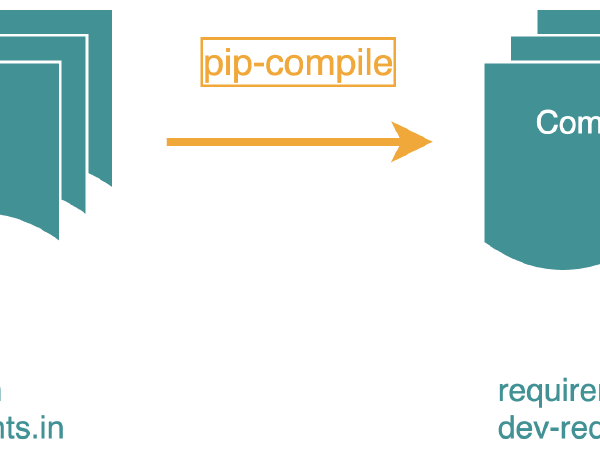
How to migrate from pip-tools to uv
At Caktus, many of our projects use pip-tools for dependency management. Following Tobias’ post How to Migrate your Python & Django Projects to uv, we were looking to migrate other projects to uv, but the path seemed less clear with existing pip-tools setups. Our requirements are often spread across multiple files, like this:

How to Migrate your Python & Django Projects to uv
Editor’s note: This post was updated on July 17th, 2025, to use the
PATH_add hook for direnv and to recommend including uv sync --locked
in your .envrc file.

Upgrade Smarter, Not Harder: Python Tools for Code Modernization
Upgrading projects is somewhat equivalent to flossing, you know you have to do it, but rarely make time for it. After all, if the project is in active development, there are exciting new features to build. And we all know that new features > project upgrades. Well not to worry, Caktus wants to make you aware of some tools that will save you from considerable repetitive work & time while simultaneously modernizing your codebase. Combined, these tools will automate part of the upgrade process, decreasing the likelihood of neglecting parts of the codebase.
How to fix factory_boy post-generation deprecation warnings
We use factory_boy for
bootstrapping test data on many Python and Django projects at Caktus.
Recently, we encountered a deprecation warning on an older project that
had been using factory_boy for some time:
2024
Getting Started with Dagster
Recently, Caktus has been using Tailscale to manage VPN connections between Android tablets and a central server. We wanted to report on the devices connected to the network using the Tailscale API. While we could use tools like Celery to fetch data from the API and load it into a database—given its widespread use in the Django ecosystem—we also wanted to explore other options.
2023
Analyze data with SQL window functions
We regularly use tools like PostgreSQL, Pandas, and Jupyter Notebooks to analyze data here at Caktus. Recently, we were reviewing North Carolina traffic stop data for the NC CopWatch project and had the opportunity to use PostgreSQL's window functions, which are helpful when aggregating data.