Python
2023

Begin your Data Analysis Journey with Pandas and Seaborn
Lately, there has been a lot of talk about scoring in the NBA because LeBron James surpassed Kareem Abdul-Jabbar with 38,390 career points. I have noticed that there is not much discussion about post-season scoring, so I searched for this dataset on Kaggle (nba_playoffs.csv) which contains the top 25 all-time post-season scoring leaders. Post-season scoring is its own beast. Since teams face one opponent multiple times in a row, they can better concentrate on the opposing team and its individual players, particularly star players. This results in improved defenses across the board. However, the post-season also means players improving their game. What is the result of improved defenses and players alike? Only elite players score consistently and thus, only the NBA's elite are on this list. This post will first examine the dataset using Pandas and then use Seaborn to graph such data.

An introduction to Django Simple History
Wouldn’t it be useful if we could document changes in our life and revisit them later at will? It would allow us to better analyze situations, remember what we were thinking, or help us remember how we got to our current state. Although no such tool currently exists for changes in life, one such tool does exist in Django. It is called django-simple-history.
2022
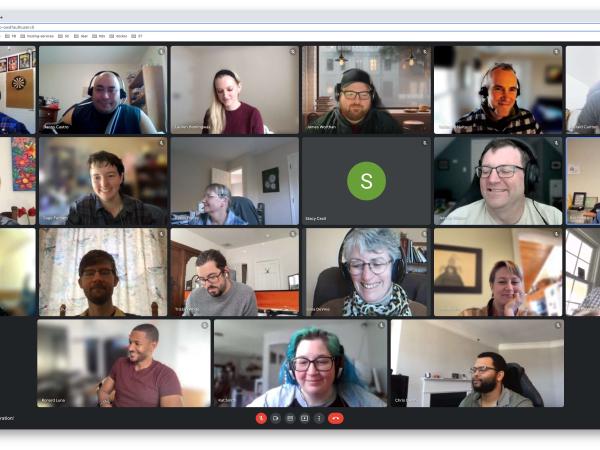
Meet the New Owners of Caktus
Nearly every week, I receive an email or two from a third party expressing interest in buying Caktus. As a matter of habit, I don't open them, let alone respond. Most are scattershot, venture capital firms looking for Software-as-a-Service companies (which Caktus is not). But when an employee approached me in 2018 expressing an interest in making Caktus employee-owned, I listened.
2021

How to Use Celery for Scheduling Tasks
There are multiple ways to schedule tasks in your Django app, but there are some advantages to using Celery. It’s supported, scales well, and works nicely with Django. Given its wide use, there are also lots of resources for learning more about it, and once learned, that knowledge is likely to be useful on other projects.
Highlights from PyCon US 2021
I had the opportunity to attend PyCon US, which was held entirely virtually. Though an in-person experience is impossible to replicate (the last time I attended PyCon in person was in 2018), I found that many aspects of the live conference were still available in an online format. Here are some of my highlights:
How to Decouple Your App From its Operating System with Docker
We regularly update and improve our upgrades and sustainability service offerings at Caktus, and a recent upgrade for a client precipitated a solution that I felt might be worth sharing. At Caktus, the preferred approach for addressing upgrades and sustainability is to make incremental updates to a project over time, trying to keep both Django and the servers themselves on a long-term support version. These are select versions of Django and Ubuntu, for example, that generally have much longer support periods than other versions, i.e., they are a good fit for applications that you will need to continue maintaining well into the future.
PyCon US 2021 is Around the Corner
PyCon US 2021 will be completely virtual this year. For the first time ever you’ll be able to enjoy this popular event from the comfort of your favorite armchair!

Python, Django, and React Development on Apple Silicon
Last year, Apple announced that they would transition their entire Mac line from Intel processors to their ARM64 Apple Silicon chip called the M1. Several weeks ago, I started testing development on MacBook Air with the Apple M1 chip (pictured above).

Automating PyPI releases with Github Actions
At Caktus, we maintain some open source packages, which are usually pieces of code that we’ve found useful when building an application, and we figure they might be useful to others. From time to time, those open source projects need a little maintenance: Maybe a bug fix has been provided from a community member, or we need to update to support a new version of Python or Django. I always hesitate to do this because I know there are multiple steps involved to ensure that any updates are properly tested, documented, versioned, and released. One of my silly blockers is that I always seem to forget how to upload a release to PyPI, which is the Python Package Index, a repository of software for Python. I call it silly because it shouldn’t really be a blocker, seeing how simple it actually is, but I still forget it each time and have to walk through the documentation step by step to make sure I do it properly. I recently found a tool that helps with this process.

My Python Development Environment
This is how to set up the One True Development Environment for Python.
Haha, just kidding, there is no such thing. Here's one way to do it that works for me, and an attempt to explain the benefits of doing it this way.